
 Samy L.
What a drone brings to a business
Drone filming for businesses is useful when it shows what ground footage cannot explain: where a site is located, how large it is or how it sits in its surroundings. Before booking, decide what your audience needs to take away. If people, hands-on work or details are the main subject, a ground-level shoot may serve you better.
Four uses to weigh up for your communication
1. Corporate video
An aerial shot can place your premises and show their surroundings. It must add information to the film and match the ground shots; whether it is relevant and feasible is checked before the shoot.
2. Showing business premises
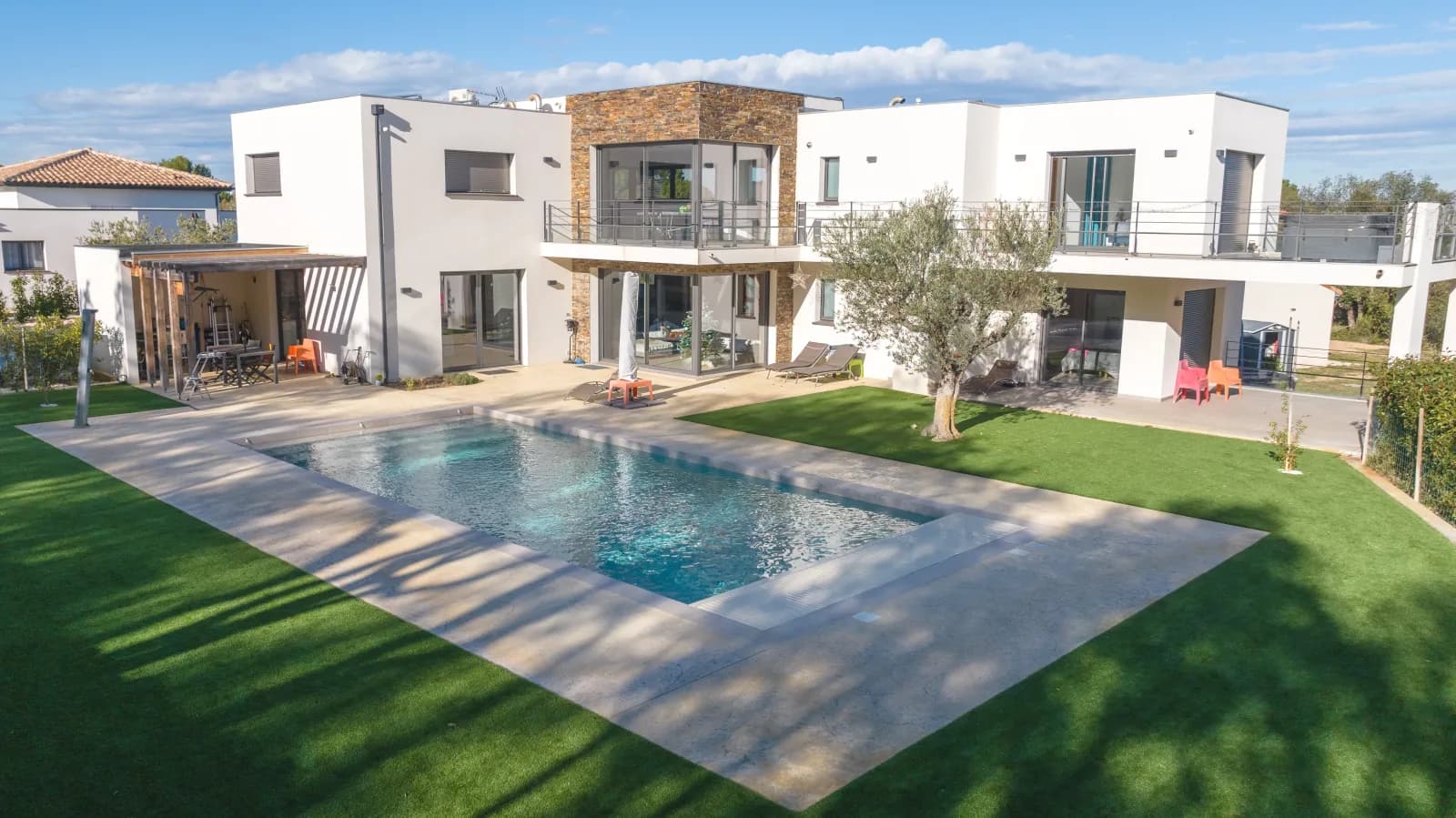
Offices, warehouses, land or hotels: plan a shot that places the spaces and their surroundings. The images can support a sales presentation, but they do not replace verified measurements and cannot, on their own, prove a property's features.
3. Construction progress
To document a building site, decide which stages to show and which viewpoints to repeat from one visit to the next when conditions allow. Plan how the files will be organised and who receives them. Visual coverage is not an inspection service or a technical survey.
4. Tourism and hospitality
Show how the accommodation relates to its grounds and the landscape, then add ground-level scenes of guests arriving and using the place. The films for L'Écrin de la Cité in Carcassonne are a reference for choosing the pace and the role of aerial shots in your story.
Define the deliverables before filming
An overview photo, a series of images or a sequence cut into a film: specify the result you expect, the formats and where it will be published. Unedited footage is not a finished film. Mapping, measurement or specialist inspection needs a separate check of skills and deliverables; it should not be confused with our visual communication service.
Drone regulations: what you need to know
The rules depend on the operation, the area, the aircraft and whether people are present. Professional use may fall under the open or the specific category, depending on the conditions. Before confirming a shoot, have these checked:
- The operating category and the skills the mission requires
- Airspace restrictions and access to the site
- The declarations or authorisations that apply to this operation
- Managing people on site, the weather and safety conditions
- The provider's responsibilities and insurance
The official DGAC pages on the open category and the specific category explain these frameworks. At Capturit, every mission goes through a feasibility study; a quote does not guarantee permission to fly.
Professional drone filming prices
- Capturit mission: priced on quote, depending on the location, the airspace and the paperwork
- Regular monitoring or specialist needs: scope and availability to confirm on quote
Plan an alternative to aerial shots
If flying is not possible on the planned date, the film must still make sense. Agree on a new date or a ground-level alternative, and the terms that go with it. For a site in Toulouse, our guide to preparing a drone mission lists the information we need to assess your address.
To start the study, send us the address, the time frame, the access, the site contact and how you plan to use the images. The Capturit packages set out the scope; only the quote fixes the price of your mission and its terms.
Check feasibility before planning aerial shots
Our drone service starts with the location, the access and the filming conditions. The films for L'Écrin de la Cité in Carcassonne show how aerial shots work alongside ground footage to present a place to stay and its surroundings.